
In today’s digital age, where online transactions have become the norm, ensuring the security and privacy of your online reservation platform is of utmost importance.
Customers trust you with their personal and financial information when making reservations, and it is your responsibility to protect that data from unauthorized access or misuse. A single security breach can not only result in financial losses but also damage your reputation and erode customer trust. Therefore, implementing robust security measures should be a top priority for any business operating an online reservation platform.
There are multiple examples of data breaches caused by weak security measures in an online reservation platform, and one of the most notable ones dates back to 2020. The breach affected several online hotel booking companies that use the reservation platform owned by the Spanish tech firm. As a result, sensitive data, including credit card details, for over 10 million travelers and guests were exposed.
What your company can do to ensure the security and Privacy of Your Online Reservation Platform?
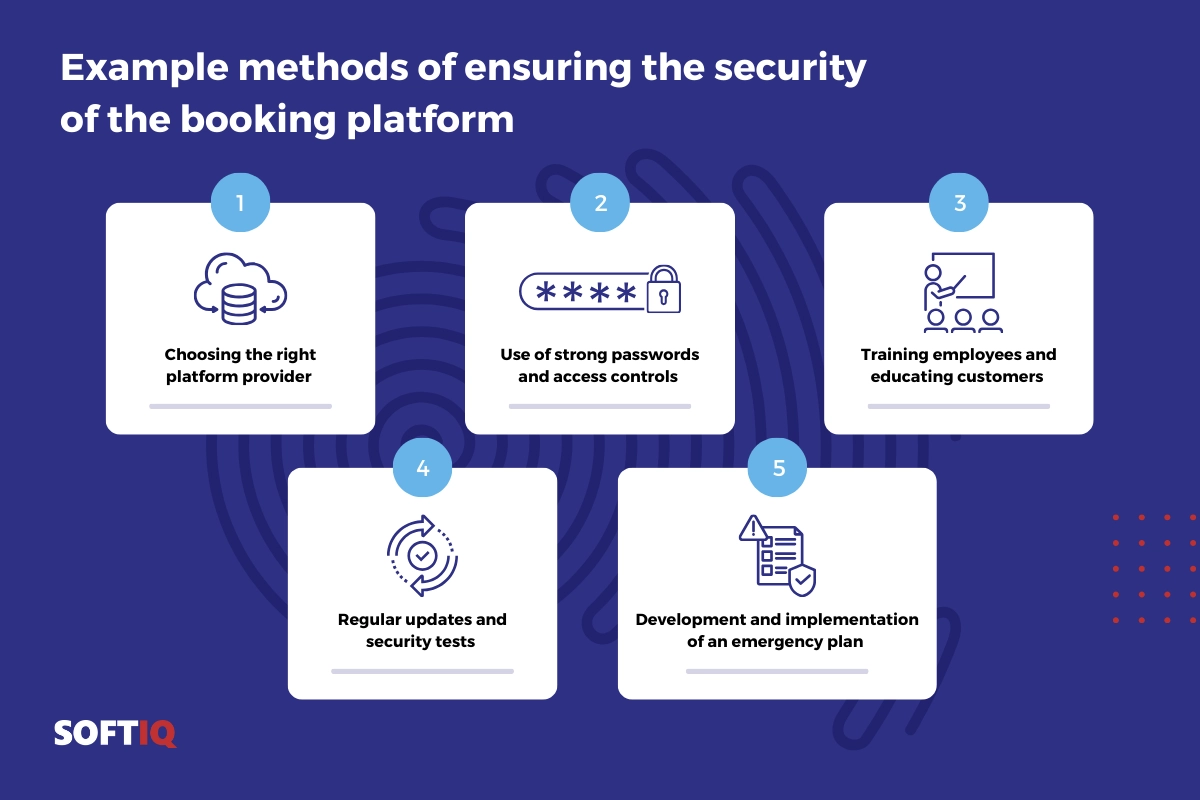
1. Choose a reliable platform provider
The first step in ensuring the security and privacy of your online reservation platform is to choose a reliable platform provider. Conduct thorough research, read reviews, and consider factors such as the provider’s reputation, track record, and commitment to security. Look for a provider that follows industry best practices and complies with relevant regulations, such as the General Data Protection Regulation (GDPR) in the European Union. A reputable provider will have robust security measures in place, including encryption, firewalls, and regular security audits. Additionally, they should offer reliable technical support and prompt updates to address any vulnerabilities that may arise.
Cooperation with software house specialists such as the SOFTIQ team will be valuable not only in verifying the level of security measures used by the platform provider. We can support you also in periodic security testing with penetration tests, as well as staff training.

2. Implement strong passwords and access control measures
One of the simplest yet most effective ways to enhance the security of your online reservation platform is by implementing strong passwords and access control measures. Require users, both staff and customers, to create complex passwords that combine uppercase and lowercase letters, numbers, and special characters. Enforce password expiration policies and provide clear guidelines on password strength. Additionally, consider implementing two-factor authentication (2FA), where users must provide an additional verification code, usually sent to their mobile device, to access their accounts. By implementing these measures, you significantly reduce the risk of unauthorized access to your platform and protect sensitive data from potential hackers.
3. Educate your staff and customers about platform security
Even with the most robust security measures in place, human error remains a significant risk factor for security breaches.
According to IBM Cyber Security Intelligence Index Report, human error was a major contributing cause in 95% of all data breaches. Therefore, it is crucial to educate your staff and customers about platform security best practices. Conduct regular training sessions to raise awareness about common security threats, such as phishing attacks and social engineering.
Teach your staff how to identify suspicious emails, links, and attachments, and emphasize the importance of not sharing login credentials or personal information with anyone. Similarly, educate your customers about the security features of your platform, such as SSL encryption, and provide tips on how they can protect their data while using your platform. By empowering your staff and customers with knowledge, you create a stronger line of defense against potential security threats.
4. Regularly update and test your online reservation platform
In the ever-evolving landscape of cybersecurity, it is crucial to regularly update and test your online reservation platform to address emerging vulnerabilities. Stay up to date with the latest security patches and updates provided by your platform provider and promptly apply them.
Regularly scan your platform for potential vulnerabilities and conduct penetration testing to identify any weaknesses that could be exploited by hackers. Consider engaging the services of a professional cybersecurity firm to perform thorough assessments and ensure that your platform meets the highest security standards. By proactively updating and testing your platform, you minimize the risk of security breaches and demonstrate your commitment to safeguarding customer data.
5. Develop a contingency plan for security breaches
Despite your best efforts, there is always a possibility of a security breach occurring. It is essential to develop a comprehensive contingency plan to minimize the impact of such incidents and ensure a swift and effective response. Your plan should include clear guidelines on how to detect, contain, and mitigate security breaches. Assign roles and responsibilities to key personnel who will be responsible for managing the incident, communicating with stakeholders, and coordinating with relevant authorities, if necessary. Regularly review and update your contingency plan to incorporate lessons learned from any previous incidents or emerging security threats. By having a well-defined plan in place, you can respond effectively to security breaches, minimize potential damage, and restore trust and confidence in your online reservation platform.
Some other good practices for ensuring the security and privacy of your online reservation platform
Implementing the following practices will help you ensure the security and privacy of your online reservation platform:
- encrypt all sensitive data, both in transit and at rest, to protect it from unauthorized access,
- regularly monitor and log all activities on your platform to detect any suspicious or unauthorized behavior,
- conduct regular security audits and vulnerability assessments to identify and address potential weaknesses,
- implement a robust incident response plan to enable a swift and effective response to security incidents.
- stay informed about the latest cybersecurity threats and trends, and adapt your security measures accordingly.
By adopting these best practices, you can significantly enhance the security and privacy of your online reservation platform, safeguard customer data, and build trust and confidence among your users.
Common cybersecurity challenges that your company might face, and how to overcome them
While implementing security measures for your online reservation platform, you may encounter some common challenges. However, with the right strategies, these challenges can be overcome:
1. Resistance to change
Some staff members and customers may resist the implementation of new security measures due to the inconvenience they perceive. To overcome this, emphasize the importance of security and privacy, and communicate the benefits of the measures, such as increased protection against data breaches and identity theft.
2. Limited resources
Small businesses may face resource constraints when it comes to investing in robust security measures. In such cases, prioritize the most critical security measures and consider outsourcing certain aspects, such as security audits, to specialized firms.
3. Emerging threats
The cybersecurity landscape is constantly evolving, with new threats emerging regularly. Stay informed about the latest threats and trends, and adapt your security measures accordingly. Engage with industry forums and collaborate with other businesses to share knowledge and best practices.
Summary
In an era where cybersecurity breaches are rampant, ensuring the security and privacy of your online reservation platform is not only a legal obligation but also a trust-building exercise.
By choosing a reliable platform provider, implementing strong passwords and access control measures, educating your staff and customers, regularly updating and testing your platform, and developing a contingency plan, you can create a secure environment for your users. Implementing best practices, learning from successful case studies, and overcoming common challenges will further enhance the security and privacy of your online reservation platform. By doing so, you build trust and confidence among your customers, establishing your platform as a safe and reliable choice for their reservations.