

In addition to Windows, macOS, and Linux, there are niche operating systems such as Haiku OS, ReactOS, and TempleOS. Each was created for a different reason and for a different user base. Haiku OS is an attempt to revive BeOS, a system that disappeared from the market over twenty years ago before it had a chance to show what it was capable of. ReactOS aims to be Windows without actually being Windows. And TempleOS is essentially the work of a single person who built the entire operating system on his own – and for very personal reasons. None of these projects had a chance of breaking into the mainstream – and none of them needed to.
Why is the world of operating systems more than just Windows, macOS, and Linux?
Market statistics are ruthless: three names take almost all the cream, but beneath the surface, things are constantly happening. Someone is recreating a system that their company buried long ago. Someone else is building an open-source clone of Windows NT from scratch, either because they don’t want to pay for a license or simply want to know how it works on the inside. And yet another person treats writing an operating system as a form of personal expression. Art for art’s sake. And sometimes for practicality.
What Haiku OS, ReactOS, and TempleOS have in common is, above all, the stubbornness with which their creators cling to a vision that was never meant to be profitable. And that’s probably why they’re worth taking a closer look at: they showcase system architecture without a commercial filter.
What is Haiku OS? The heir to BeOS that’s still alive today
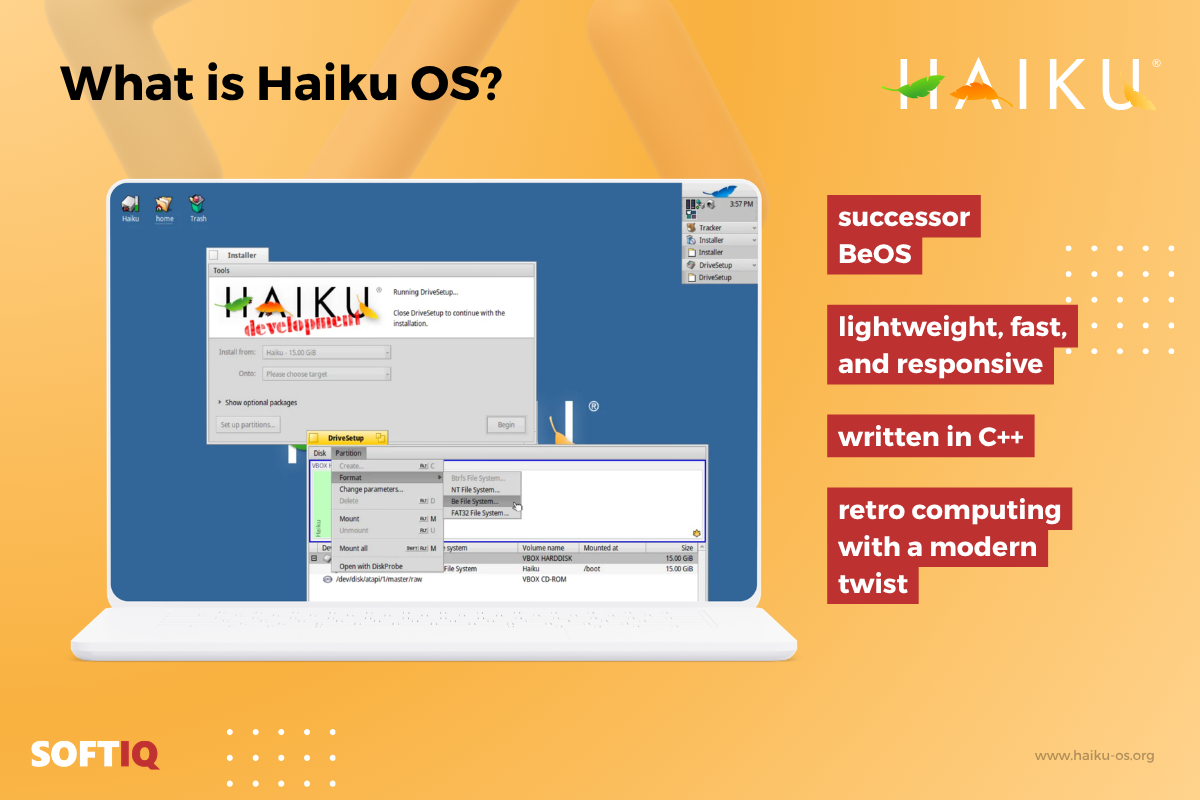
BeOS was born in the 1990s as a system designed with multimedia in mind – fast, responsive, and built for modern (for its time) hardware. It was meant to be a serious competitor to the classic Mac OS. It didn’t work out – in 2001, Palm acquired Be Inc., and development of BeOS came to an end. For part of the community, however, this was just the beginning. They decided to recreate the system from scratch, while maintaining compatibility with the original API. This is how the OpenBeOS project came to be, later renamed Haiku.
Where did Haiku OS come from?
The name itself is a nod to BeOS error messages, which were often formatted like Japanese haiku – short, three-line structures. The project has been in continuous development for over twenty years, and in 2018 it released its first stable version (R1/beta1). The entire system, from the kernel to the user interface, is built from the ground up in C++, with a native object-oriented API.
Who is Haiku OS for?
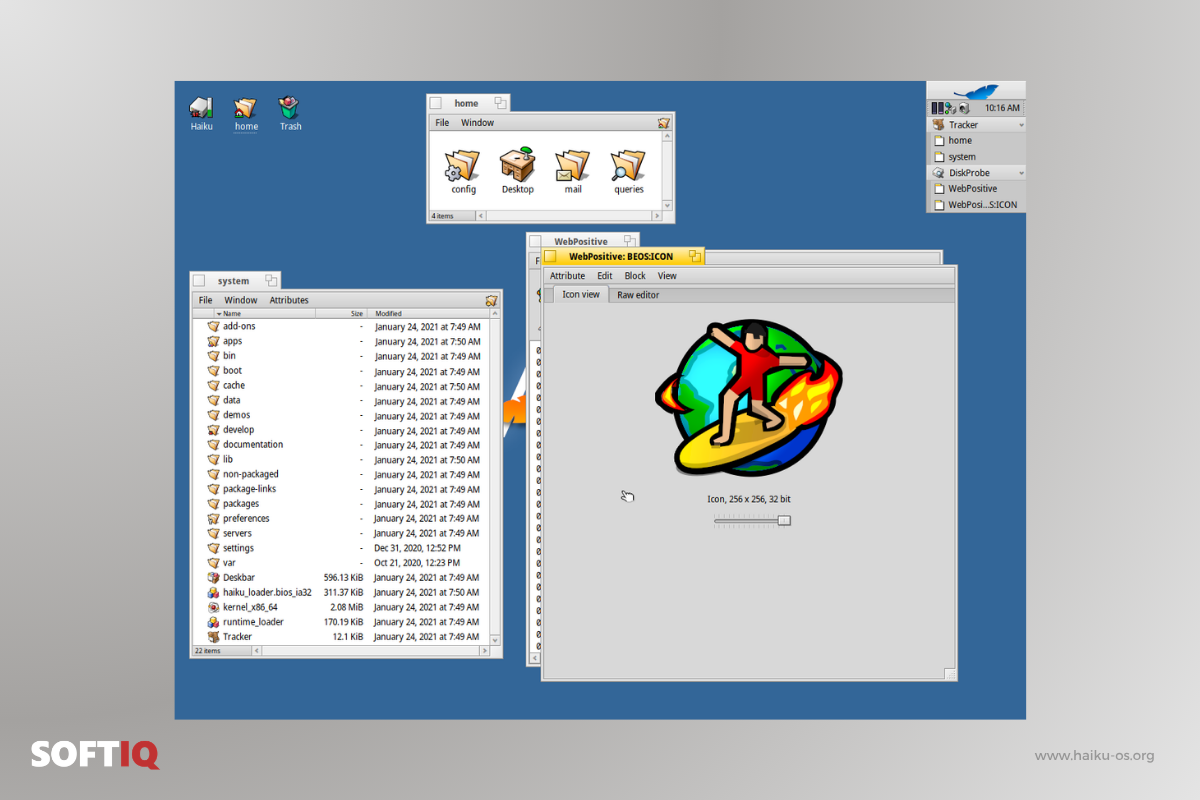
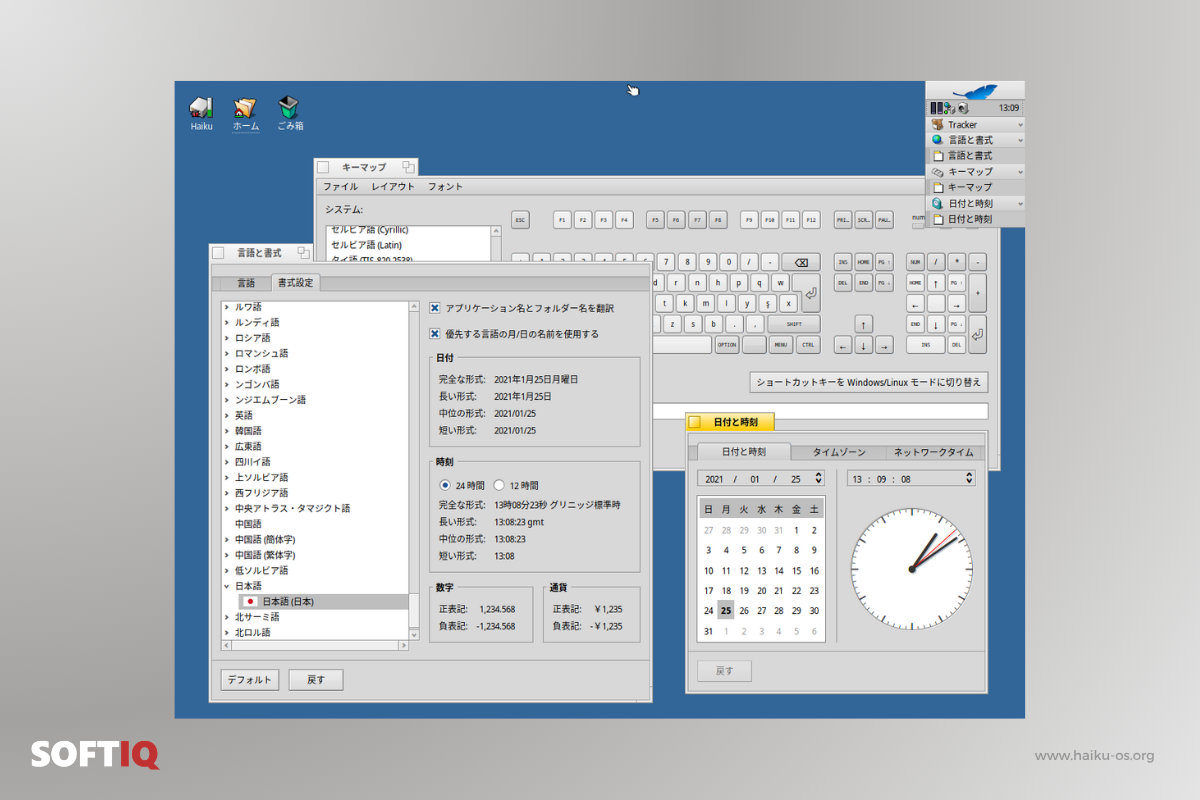
If you’ve ever booted up Linux on an old laptop and found it frustrating that different desktop environments look and behave completely differently – Haiku solves this problem because the entire interface is consistent. It’s a system for people who enjoy retro computing, for developers interested in a different approach to architecture, and for those who want to breathe new life into old hardware without installing a heavy desktop environment.
What is ReactOS? A system that wants to be Windows, but doesn’t quite get there
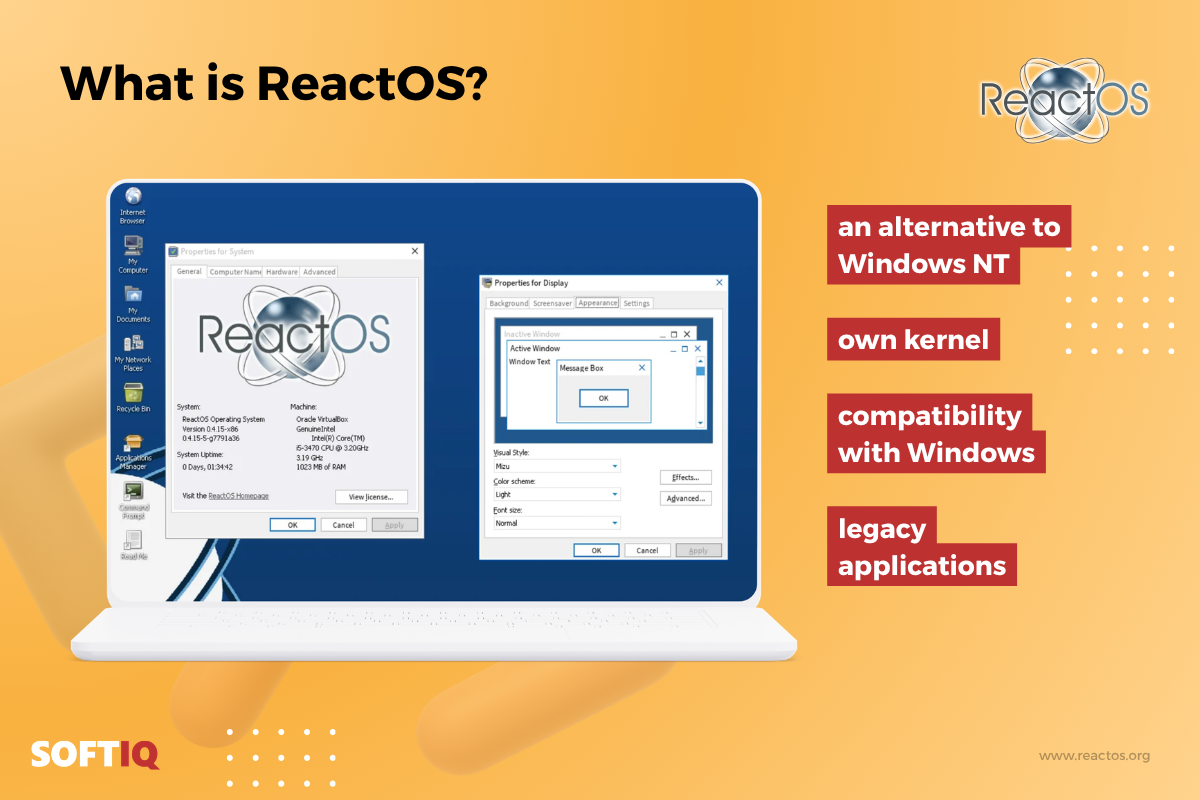
Of all three projects, ReactOS probably has the most ambitious goal: to create a fully open-source operating system that is binary-compatible with applications and drivers written for Windows NT (NT4, 2000, XP, 2003, Vista, 7). Currently, the project is primarily focused on compatibility with Windows Server 2003, although support for newer versions is also being developed (details are available in the official GitHub repository).
How does Windows compatibility work in ReactOS?
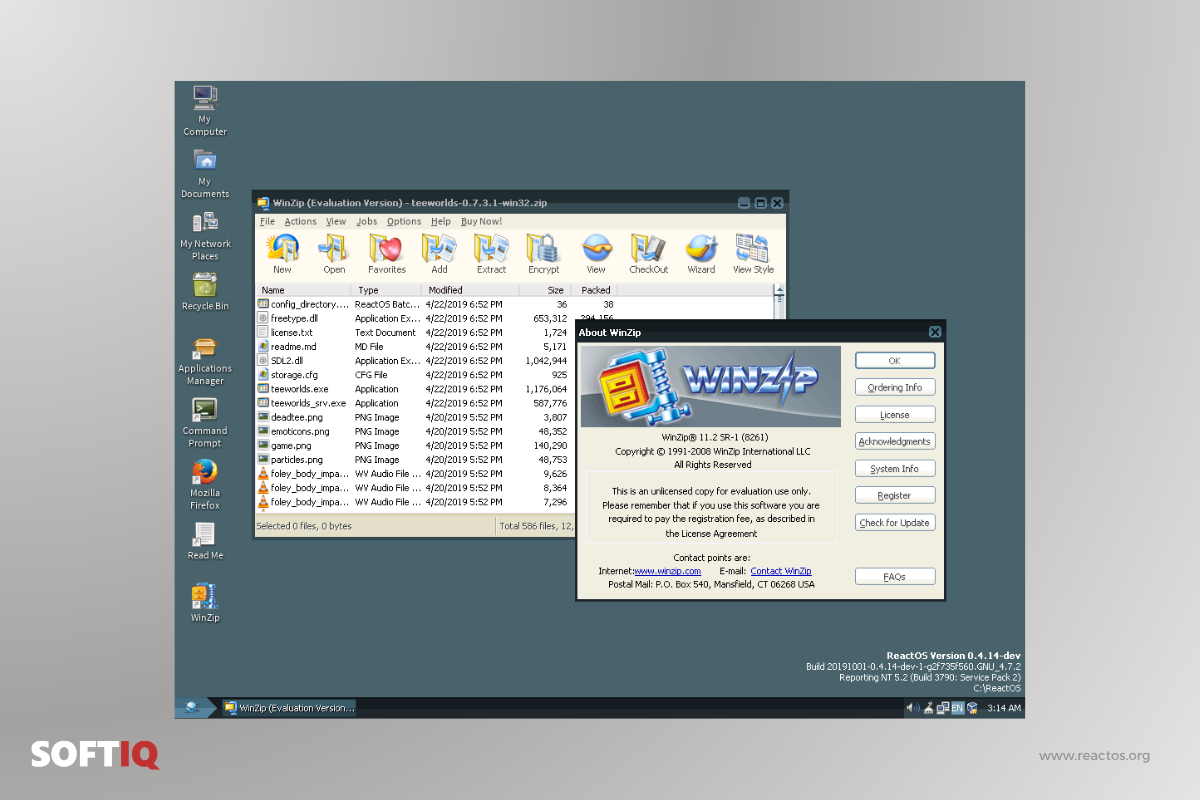
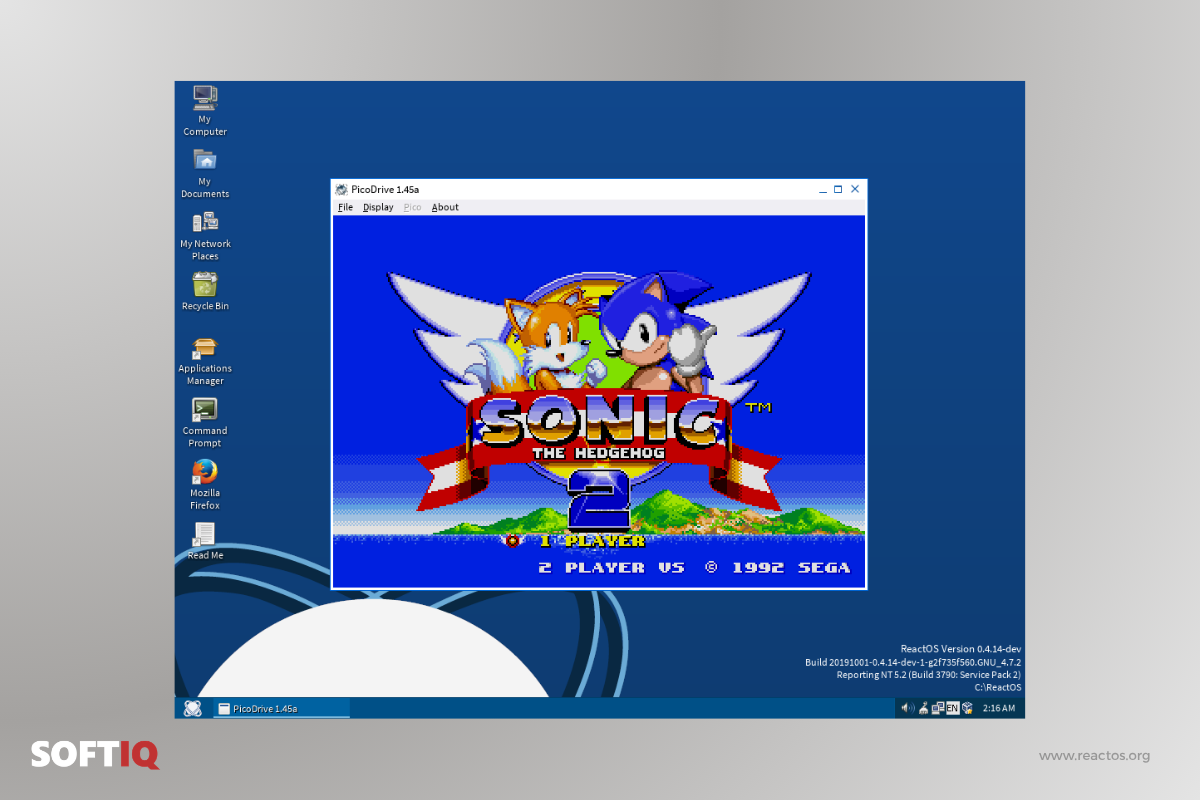
This isn’t Wine – a compatibility layer that runs on Linux. ReactOS is a standalone system with its own kernel, designed based on the Windows NT architecture. Thanks to this, in theory, it can run native Windows applications and drivers without any emulation. In practice, results vary – some programs and games work flawlessly, while others require workarounds or simply refuse to run. The project is still in alpha, so surprises are to be expected.
Where does ReactOS work best?
Wherever a lightweight, Windows-compatible platform is needed but without licensing costs—older industrial systems, terminals, and virtual machines for testing legacy software. For engineers working on Windows security and reverse engineering, it’s also a source of knowledge in and of itself, because it documents the system’s mechanisms openly, without any manufacturer secrets.
What is TempleOS? A One-Man project that still fascinates people years later
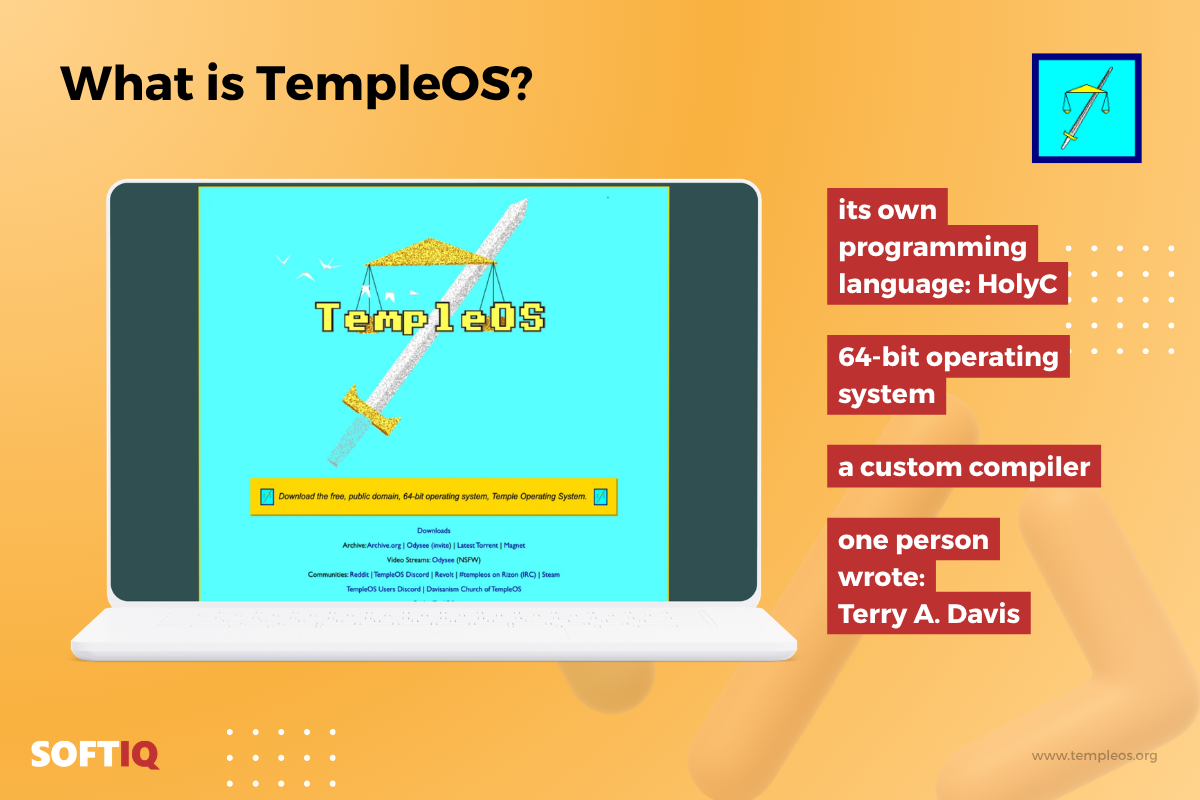
Of the three, TempleOS is by far the most remarkable. The entire 64-bit operating system was written by a single person – Terry A. Davis, an American programmer and engineer.
Who was Terry Davis, and why did he create TempleOS?
Davis described TempleOS as a temple – literally, according to his own interpretation of biblical passages. In 1996, he was diagnosed with bipolar disorder; the diagnosis was later changed to schizophrenia. This experience left a deep mark not only on his life but also on the project itself – religious references appear explicitly in the TempleOS code and documentation. Davis passed away in 2018, but the community continues to keep TempleOS and its derivative projects alive.
What makes TempleOS unique from a technical standpoint?
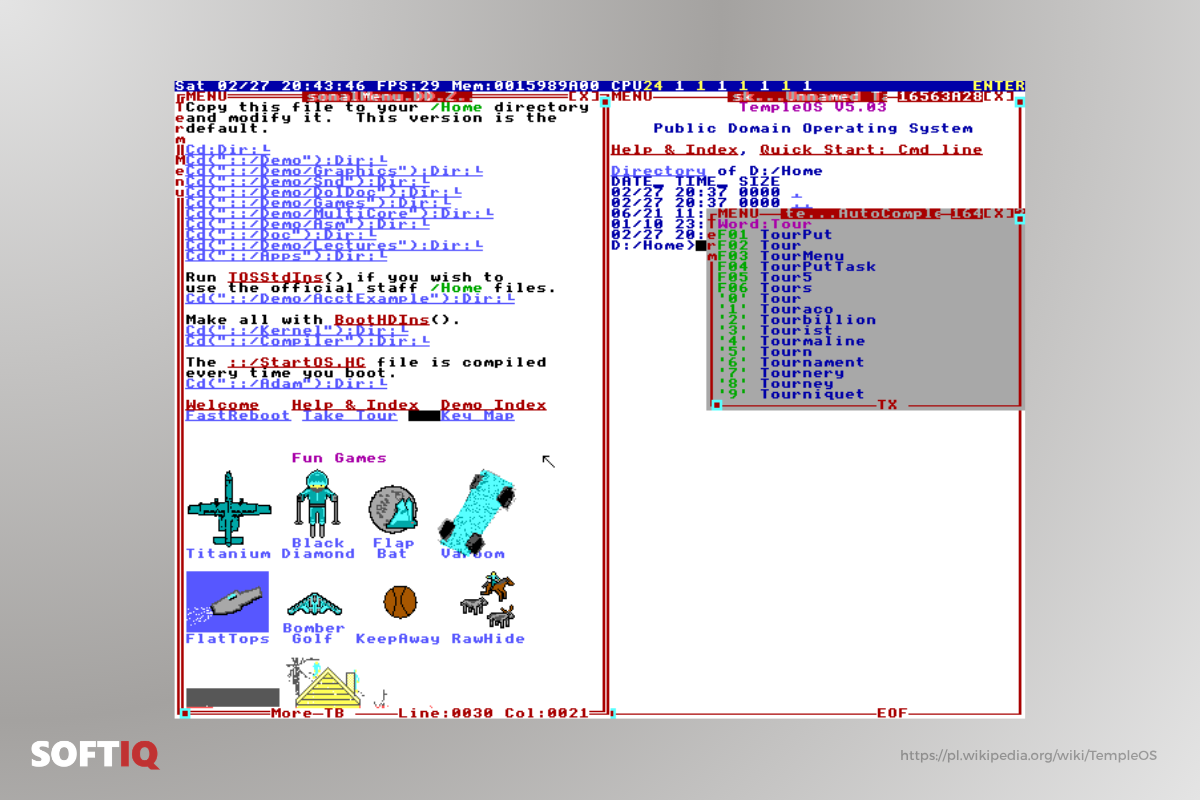
The personal context is one thing, but the technical side of TempleOS is truly impressive, even to skeptics. Davis wrote his own programming language – HolyC – along with a compiler, a text editor, and even a 3D graphics engine. Everything fits into a single system image measuring several dozen megabytes. The system runs in ring 0 mode, without memory protection and without preemptive multitasking. Davis claimed this was a deliberate choice – simpler architecture, less overhead, and faster performance on modern hardware.
Other niche operating systems worth exploring
Haiku, ReactOS, and TempleOS are just the beginning of this list. Here are a few more projects worth knowing about:
- SerenityOS – it looks and feels a bit like a time machine back to the ’90s, and it’s also great for learning low-level programming.
- A system written in Rust, with an emphasis on memory safety and a microkernel architecture – that’s Redox OS, a project heading in a completely different direction than the rest.
- Plan 9 from Bell Labs – created by the same people who gave the world Unix. They took the idea that “everything is a file” absolutely seriously: even the network is a file in it.
- A still-active, open-source implementation of DOS – FreeDOS – useful, for example, for running older industrial software or retro games.
Do niche operating systems have any practical applications?
For most companies and individual users – no. They won’t replace everyday Windows or macOS. Their value lies elsewhere: in education, because they allow you to see the system’s architecture without the layers of abstraction that have accumulated over decades; in security research; and in keeping older IT environments alive. And for teams developing cross-platform software, they can simply serve as inspiration – proof that the “standard” approach to system design is just one of many possible paths, not the only correct one.
Frequently Asked Questions
The most commonly mentioned ones are Haiku OS (the successor to BeOS), ReactOS (an open-source equivalent of Windows NT), and TempleOS (a system developed by Terry Davis). Others include SerenityOS, Redox OS, Plan 9, and FreeDOS.
Yes. Haiku supports x86 and x86_64 architectures and can be installed on both physical hardware and virtual machines—although support for the latest hardware components varies.
Yes. It is built from scratch, without using Microsoft’s source code, so legally it is a completely separate operating system.
Sam Davis passed away in 2018, but the community hasn’t abandoned the project—forks and derivatives are being developed, though the original TempleOS remains exactly as he left it.
Linux distributions share the same kernel and differ mainly in what surrounds it. Haiku OS, ReactOS, and TempleOS are different—each has its own proprietary kernel, independent of Linux or Unix.
Do you want to create your own system?
At SOFTIQ, we work with a wide variety of environments and architectures on a daily basis—from traditional business implementations to projects that require custom solutions.
If you’re looking for a team that understands that a “standard” approach isn’t always the best one, check out our custom software development services.
Date of publication / last update: September 2026